Our News

  • CAIR Goes to Court to Challenge Trump’s Muslim Ban

    CAIR Goes to Court to Challenge Trump’s Muslim Ban

    (WASHINGTON, D.C., 12/8/17) – The Council on American-Islamic Relations (CAIR), the nation’s largest Muslim civil rights and advocacy organization today went to court to challenge President Trump’s Muslim ban. #NoMuslimBanEver.

    This morning, the entire Fourth Circuit Court of Appeals heard arguments on whether to uphold the Maryland district court’s decision to partially block the latest version of the ban. The Trump administration argued that the president’s anti-Muslim comments and tweets are irrelevant.

    The government continued to urge the court that once President Trump uses the words “national security” the court must accept that conclusion. On that point, Judge Pamela Harris commented that even with giving President Trump deference and construing his statements “in a light more favorable to the president, it’s a little tricky to find the national security rationale.”

    SEE: Fourth Circuit Struggles with Trump’s Tweets in Weighing Travel Ban

    CAIR and others argued that the Muslim ban is discriminatory and that the president is acting to disfavor Islam in violation of the First Amendment. “Muslim Ban 3.0” seeks to re-write immigration laws in an attempt to block more than 150 million Muslims from even considering entering America.

    Today’s arguments follow the Ninth Circuit Court of Appeals case challenging a Hawaii District Court order that also blocked Muslim Ban 3.0.  The Fourth Circuit is expected to issue a decision quickly.

    “CAIR continues to stand for freedom, equality and religious tolerance. We will not rest while President Trump’s Islamophobic prejudice unfairly separates American Muslims from their loved ones,” said CAIR National Litigation Director Lena Masri.

    Earlier this week, CAIR expressed deep concern over the U.S. Supreme Court’s decision to allow President Trump’s “Muslim Ban” to be implemented until the court makes a final decision about the executive action’s constitutionality.

    CAIR and the Brennan Center for Justice filed suit against President Trump’s Muslim Ban on behalf of six American Muslims impacted by the immigration restrictions. Civil rights attorneys, including CAIR National attorney Gadeir Abbas, delivered oral arguments against the ban in mid-October.

    On appeal, this case, Zakzok v. Trump, was consolidated with two others and are jointly pending before the Fourth Circuit.

    Video: CAIR, Other Civil Rights Groups Hold Presser After Md. Court Arguments on Trump’s Muslim Ban

    In a broad ruling on October 18th, U.S. District Judge Theodore D. Chuang granted CAIR and other groups’ request for a nationwide injunction prohibiting the Trump administration from implementing its latest attempt to exclude Muslims from the United States.

    Judge Chuang ruled that the plaintiffs were likely to ultimately succeed in proving that anti-Muslim animus motivated the travel ban in violation of the Establishment Clause. He also noted that the ban violates federal law, which forbids the government from discriminating against visa applicants based on their nationality.

    SEE: Second Judge Rules Against Latest Travel Ban, Saying Trump’s Own Words Show It Was Aimed at Muslims

    CAIR welcomed a decision by another federal judge in Hawaii to block the Trump administration from implementing the ban. The judge’s decision only blocks the ban for 14 days.

    SEE: CAIR Welcomes Federal Judge’s Decision to Block Trump’s ‘Muslim Ban 3.0’

    In September, CAIR — with the Brennan Center for Justice at NYU School of Law and Profeta & Eisenstein — filed an amicus brief with U.S. Supreme Court on behalf of seven American Muslims.

    READ Amicus Brief

    These groups also filed an amicus brief in the Ninth Circuit in August.

    Read CAIR’s Amicus Brief

    In January, just days after Trump signed the first Muslim ban executive order, CAIR filed suit.

    SEE: CAIR Files Federal Suit Challenging Constitutionality of Trump’s ‘Muslim Ban’ Executive Order

    CAIR is America’s largest Muslim civil liberties and advocacy organization. Its mission is to enhance the understanding of Islam, encourage dialogue, protect civil liberties, empower American Muslims, and build coalitions that promote justice and mutual understanding.

    La misión de CAIR es mejorar la comprensión del Islam, fomentar el diálogo, proteger las libertades civiles, capacitar a los musulmanes estadounidenses, y construir coaliciones que promuevan la justicia y la comprensión mutua.

    – END –

    CONTACT: CAIR National Litigation Director Lena Masri, 248-390-9784, lmasri@cair.com; CAIR Senior Litigation Attorney Gadeir Abbas, 720-251-0425, gabbas@cair.com
  • COMMUNITY ADVISORY: Supreme Court Allows Full Implementation of Muslim Ban 3.0

    COMMUNITY ADVISORY: Supreme Court Allows Full Implementation of Muslim Ban 3.0

    FOR IMMEDIATE RELEASE 12-4-17
    COMMUNITY ADVISORY: SUPREME COURT ALLOWS MUSLIM BAN TO GO FORWARD 
    Dear Community Members,
    The Supreme Court issued a decision on the Muslim Ban (‘Muslim Ban 3.0’) this afternoon. The news is bad, but the fight against the ban is not over.
    Today’s developments have raised numerous concerns and questions.
    Please note that the information below is subject to change based on the various legal challenges that may be advanced in court. The interpretations below can change quickly and we will update you should that happen.
    TIMING OF THE BAN:
    As of this afternoon, there is no longer anything preventing the Trump Administration from implementing the Muslim Ban immediately.  
    WHO WILL BE IMPACTED?
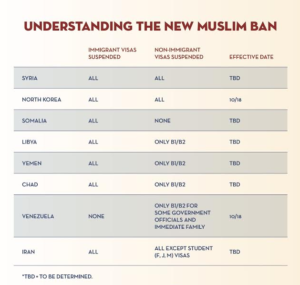
    Certain nationals of eight countries – Chad, Iran, Libya, North Korea, Somalia, Syria, Venezuela, and Yemen. Please see below for a list of how certain nationals from each country will be impacted.
    General limitations
    • Muslim Ban 3.0 only applies to individuals who are i) outside of the U.S. on the effective date (either 9/24/2017 or 10/18/2017, depending on the country and individual), ii) who did not have a valid visa on that date, and  iii) who have not obtained a waiver under Section 3(c).
    • Muslim Ban 3.0  does not apply to:
      • Lawful permanent residents (green card holders);
      • Individuals admitted or paroled into the U.S. on or after the effective date of the new Muslim Ban;
      • Those with a document other than a visa that allows them to travel to the U.S., if the document is dated on or after the effective date of the new Muslim Ban;
      • Dual-nationals traveling on a passport from a non-designated country;
      • Individuals granted asylum;
      • Refugees already admitted to the U.S.; or
      • Individuals granted withholding of removal, advance parole, or protection under the Convention against Torture
    Impacted countries:
    • Iran
      • All immigrant and nonimmigrant entry is suspended for Iranian nationals except for  those with F, J, or M visas.
      • Those with F, J, or M visas will most likely be subject to “enhanced screening and vetting requirements.”
    • Libya
      • All immigrants and nonimmigrants on business (B-1), tourist (B-2), business/tourist (B-1/B-2) visas are suspended.
    • Somalia
      • All immigrant visas are suspended for Somali nationals.
      • Non-immigrant visas are permitted, subjected to heightened screening.
    • Syria
      • All immigrant and nonimmigrant entry is suspended for Syrian nationals.
    • Sudan
      • Sudan was removed from the list of restricted countries in the new Muslim Ban.
      • Sudanese visa holders who were impacted by earlier Muslim Bans should now be able to reapply for visa.
    • Yemen
      • All immigrant visas and nonimmigrant business (B-1), tourist (B-2), and business/tourist (B-1/B-2) visas are suspended.
    • Chad
      • All immigrant visas and nonimmigrant business (B-1), tourist (B-2), and business/tourist (B-1/B-2) visas are suspended.
    • North Korea
      • All immigrant and nonimmigrant visa holders are suspended from entering the U.S.
    • Venezuela
      • The entry of officials of government agencies of Venezuela involved in screening and vetting procedures and their immediate family members, as nonimmigrants on business (B-1), tourist (B-2), and business/tourist (B-1/B-2) visas, is suspended. Additionally, nationals of Venezuela who are visa holders are subject to additional measures.
      • Per Section 3(b)(v) of the new Muslim Ban, certain Venezuelans traveling on diplomatic visas are not affected by this order.
    HOW TO GET HELP:
    Contact CAIR-Ohio, Cleveland Chapter at 216.830.2247 if:
    • You or someone you know is impacted by this Muslim Ban and would like legal advice or assistance;
    • Your community would like to request a “Know Your Rights” presentation.
    For a quick download of CAIR’s civil rights app, click here: http://www.cair.com/app
    We remain committed to challenging this Ban and protecting the communities we serve. Please do not hesitate to reach out.
    CAIR is America’s largest Muslim civil liberties and advocacy organization. Its mission is to enhance the understanding of Islam, encourage dialogue, protect civil liberties, empower American Muslims, and build coalitions that promote justice and mutual understanding.
     
    – END –
  • CAIR Says U.S. Supreme Court’s Decision on Trump’s Muslim Ban Ignores Impact on Citizens and Their Relatives Abroad

    CAIR Says U.S. Supreme Court’s Decision on Trump’s Muslim Ban Ignores Impact on Citizens and Their Relatives Abroad

    (WASHINGTON, D.C., 12/4/17) – The Council on American-Islamic Relations (CAIR), the nation’s largest Muslim civil rights and advocacy organization, today expressed deep concern over the U.S. Supreme Court’s decision to allow President Trump’s “Muslim Ban” to be implemented until the court makes a final decision about the executive action’s constitutionality.

    Earlier today, the court issued two orders staying the Hawaii and Maryland federal courts’ injunctions that had, until today, largely prevented the Trump administration from implementing Muslim Ban 3.0’s visa restrictions.

    Although this decision allows Muslim Ban 3.0 to go into effect now, the court could still find it unconstitutional at a later date.

    “This decision ignores the very real human consequences to American citizens and their families abroad imposed by President Trump’s Muslim Ban 3.0,” said CAIR National Litigation Director Lena Masri.

    “The Supreme Court’s actions today are a good reminder that we can’t simply rely on the courts to address the Trump administration’s efforts to marginalize Muslims and other minorities,” said CAIR Senior Litigation Attorney Gadeir Abbas. “We must all do everything we can to oppose Muslim Ban 3.0.”

    CAIR and the Brennan Center for Justice filed suit against President Trump’s Muslim Ban on behalf of six American Muslims impacted by the immigration restrictions. Civil rights attorneys, including CAIR National attorney Gadeir Abbas, delivered oral arguments against the ban in mid-October.

    On appeal, this case, Zakzok v. Trump, was consolidated with two others and are jointly pending before the Fourth Circuit.  Oral argument in the Fourth Circuit is set for this Friday, December 8th, in Richmond, Va.

    Video: CAIR, Other Civil Rights Groups Hold Presser After Md. Court Arguments on Trump’s Muslim Ban

    In a broad ruling on October 18th, U.S. District Judge Theodore D. Chuang granted CAIR and other groups’ request for a nationwide injunction prohibiting the Trump administration from implementing its latest attempt to exclude Muslims from the United States.

    Judge Chuang ruled that the plaintiffs were likely to ultimately succeed in proving that anti-Muslim animus motivated the travel ban in violation of the Establishment Clause. He also noted that the ban violates federal law, which forbids the government from discriminating against visa applicants based on their nationality.

    SEE: Second Judge Rules Against Latest Travel Ban, Saying Trump’s Own Words Show It Was Aimed at Muslims

    Yesterday, CAIR welcomed a decision by another federal judge in Hawaii to block the Trump administration from implementing the ban. The judge’s decision only blocks the ban for 14 days.

    SEE: CAIR Welcomes Federal Judge’s Decision to Block Trump’s ‘Muslim Ban 3.0’

    Today, CAIR will join a coalition of national and local American Muslim and civil rights organizations at the #NoMuslimBanEver rally and march outside the White House in Washington, D.C.

    In September, CAIR — with the Brennan Center for Justice at NYU School of Law and Profeta & Eisenstein — filed an amicus brief with U.S. Supreme Court on behalf of seven American Muslims.

    READ Amicus Brief

    These groups also filed an amicus brief in the Ninth Circuit in August.

    Read CAIR’s Amicus Brief

    In January, just days after Trump signed the first Muslim ban executive order, CAIR filed suit.

    SEE: CAIR Files Federal Suit Challenging Constitutionality of Trump’s ‘Muslim Ban’ Executive Order

    CAIR is America’s largest Muslim civil liberties and advocacy organization. Its mission is to enhance the understanding of Islam, encourage dialogue, protect civil liberties, empower American Muslims, and build coalitions that promote justice and mutual understanding.

    La misión de CAIR es mejorar la comprensión del Islam, fomentar el diálogo, proteger las libertades civiles, capacitar a los musulmanes estadounidenses, y construir coaliciones que promuevan la justicia y la comprensión mutua.

    – END –

    CONTACT: CAIR National Litigation Director Lena Masri, 248-390-9784, lmasri@cair.com ; CAIR Senior Litigation Attorney Gadeir Abbas, 720-251-0425, gabbas@cair.com
  • CAIR Reps Speak at Trinity Cathedral Forum on Civil Rights Issues Facing American Muslims

    CAIR Reps Speak at Trinity Cathedral Forum on Civil Rights Issues Facing American Muslims

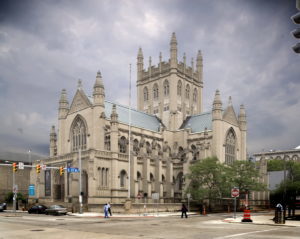
    (CLEVELAND, OH, 11/27/17) – Representatives of the Cleveland chapter of the Council on American-Islamic Relations (CAIR-Cleveland) recently presented on civil rights issues facing the Muslim community in America at the Dean’s Forum at Trinity Episcopal Cathedral.

    The forum, which was moderated by The Rev. Dr. Paul L. Gaston III, Interim Dean of the Cathedral, was a part of a series of Sunday dialogues called “The Dean’s Forum Podcast.”

    It covered issues such as the gap between the faith of Islam and its peaceful practitioners and the negative perception of Muslims in America due to the scourge of terrorism.

    The forum also included information on Islamophobia and those who promote anti-Muslim bigotry, including right-wing think-tanks, religious figures, public officials, and commentators.

    Forum participants touched on the rise in hate crimes and anti-Muslim discrimination, and provided information on dispelling stereotypes and how members of interfaith communities can take practical steps to help stem the tide of anti-Muslim bigotry through concrete action at the local level.

    To listen to the Dean’s Forum Podcast, go to:

    https://trinitycleveland.org/the-deans-forum-podcasts/

    “Understanding and empathy are key to activating the wider public to stand up against scapegoating and bigotry that are increasingly being deployed for political gain in our country,” said CAIR-Cleveland Executive Director Julia Shearson. “The forum provided a chance for congregants to hear first-hand about how the rise of anti-Muslim racism and hate crimes are directly impacting the American Muslim community and what interfaith allies can do to help stop the hate.”

    CAIR is America’s largest Muslim civil liberties and advocacy organization. Its mission is to enhance the understanding of Islam, encourage dialogue, protect civil liberties, empower American Muslims, and build coalitions that promote justice and mutual understanding.

    La misión de CAIR es mejorar la comprensión del Islam, fomentar el diálogo, proteger las libertades civiles, capacitar a los musulmanes estadounidenses, y construir coaliciones que promuevan la justicia y la comprensión mutua.

    CONTACT: Julia A. Shearson, CAIR-Cleveland executive director, 216.440.2247 or jshearson@cair.com, Ibrahim Hooper, CAIR National Communications Director, 202.744.7726, ihooper@cair.com

  • CAIR-Ohio Hosts Muslim Day at the Capitol Event, Lobbies Against ‘Lunch Shaming’ and School Bullying

    CAIR-Ohio Hosts Muslim Day at the Capitol Event, Lobbies Against ‘Lunch Shaming’ and School Bullying

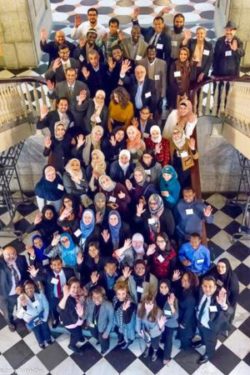
    (COLUMBUS, OHIO, 11/2/17) — On Tuesday, October 31, CAIR-Ohio hosted its “Muslim Day at the Capitol” event at the Ohio Statehouse.

    The event focused on empowering Ohio’s American Muslim community and advocating for legislation that would positively impact all Ohioans.

    Participants attended 28 meetings with different members’ offices to discuss Senate Bill 172, The Hunger Free Students’ Bill of Rights Act, which aims to end the practice known as “lunch shaming” and for House Bill 360, the Ohio Anti-Bullying and Hazing Act, which aims to take a firm but rehabilitation-focused approach to bullying.

    Opening remarks and the advocacy training were conducted by CAIR-Columbus Public Affairs Coordinator Usjid Hameed. Following the training, a panel focused on the importance of diverse voices in the policy process took the stage. Panelists included Assistant Senate Minority Leader Charleta Tavares, Columbus City Councilmember Jaiza Page, Assistant House Minority Whip Amelia Sykes, and Kelly Capatosto, Senior Research Associate at the Kirwan Institute. Senate Minority Leader Kenny Yuko addressed participants during lunch.

    After lunch, the almost 70 attendees – including many Ohio students — broke into groups to meet with various members’ offices.

    “It is critical in our current political climate for American Muslims to continue being engaged,” said Hameed. “This event provided an excellent opportunity for concerned citizens in the American Muslim community to enhance their understanding of the political process while urging Ohio lawmakers to address the issues of lunch shaming and bullying.”

    CAIR is America’s largest Muslim civil liberties and advocacy organization.  The CAIR-Ohio affiliate has three chapters in Ohio – Columbus, Cleveland and Cincinnati.  Its mission is to enhance the understanding of Islam, encourage dialogue, protect civil liberties, empower American Muslims, and build coalitions that promote justice and mutual understanding.

    – END –

    CONTACT: CAIR-Columbus Public Affairs Coordinator Usjid Hameed, uhameed@cair.com, 614-451-3232

  • CAIR-Cleveland Holds “Know Your Rights” Forum for Uzbek Muslim Community at Northeast Ohio Mosque

    CAIR-Cleveland Holds “Know Your Rights” Forum for Uzbek Muslim Community at Northeast Ohio Mosque

    (CLEVELAND, OH, 11/2/2017) — The Cleveland chapter of the Council on American-Islamic Relations (CAIR-Cleveland) hosted an emergency Know Your Rights forum for the Uzbek community at the Islamic Society of Akron and Kent. The forum was in response to the surge in law enforcement questioning of the local Uzbek community in the wake of the terrorist attack in New York City allegedly perpetrated by an Uzbek national.

    The alleged perpetrator had lived in the Cuyahoga Falls, Ohio, area for several years before moving to Florida.

    CAIR-Cleveland said the overarching message of the forum was that American Muslims strongly support law enforcement and the protection of our national security and, like all Americans, we also value civil rights.

    At the forum, which was conducted in English and Uzbeki language, a CAIR representative and two attorneys provided basic Know Your Rights information regarding interacting with law enforcement. The purpose of the forum was to ensure that community members are informed of their rights, including the right to remain silent as well as the right to have an attorney present during any law enforcement interviews. The forum also covered issues related to immigration status, warrants and search and seizure issues.

    SEE: Your Rights with Law Enforcement at https://www.cair.com/know-your-rights.html

    CAIR’s Know Your Rights & Responsibilities Pocket Guide

    https://www.cair.com/images/pdf/Know-Your-Rights-Guide.pdf

    “Because the Uzbek community is being blanketed by FBI and DHS requests for voluntary interviews in the wake of the New York terror attack, it is important that constitutional rights are upheld during any and all law enforcement interactions, including any potential interviews,” said Julia Shearson, CAIR-Cleveland executive director, who helped moderate the forum.

    CAIR is America’s largest Muslim civil liberties and advocacy organization. Its mission is to enhance the understanding of Islam, encourage dialogue, protect civil liberties, empower American Muslims, and build coalitions that promote justice and mutual understanding.

    La misión de CAIR es mejorar la comprensión del Islam, fomentar el diálogo, proteger las libertades civiles, capacitar a los musulmanes estadounidenses, y construir coaliciones que promuevan la justicia y la comprensión mutua.

    CONTACT: Julia A. Shearson, CAIR-Cleveland executive director, 216.440.2247 or jshearson@cair.com , Ibrahim Hooper, CAIR National Communications Director, 202.744.7726, ihooper@cair.com

  • Know Your Rights If Contacted by Law Enforcement

    Know Your Rights If Contacted by Law Enforcement

    Cleveland & Northern Ohio Chapter Community Message:

    American Muslims strongly support law enforcement and the protection of our national security. As Americans, we also value civil rights.

    If you are visited by federal law enforcement agents, remember:

    •  You have the legal right to have a lawyer present when speaking with federal law enforcement agencies. This is true even if you are not a citizen or have been arrested or detained. This is your legal right. Refusing to answer questions cannot be held against you and does not imply that you have something to hide. Answering a question incorrectly can hurt you more than not answering at all. An attorney is best able to protect your rights. Call us immediately if you are contacted. We will arrange an available attorney for you, 216.830.2247 or 216.440.2247.
    •  You do not have to permit any law enforcement officer to enter your home or office if they do not have warrant. Law enforcement agents must have a search warrant, except in emergency situations, in order to enter your house. If they say they have a warrant, politely ask to see it before allowing them to enter. If they have a warrant, be courteous and polite, but remember that you are under no obligation to answer questions without a lawyer present. You should tell the agents that you do not consent to the search so that they cannot go beyond what the warrant authorizes.
    •  You should NEVER lie or provide false information to any law enforcement agency. Lying to law enforcement agents is a crime.
    •  Remember to ask any investigator who visits you for a business card so you can give it to your lawyer. At least get the name, contact information and agency of the officer.

    (more…)

  • CAIR Welcomes Federal Judge’s Decision to Block Trump’s ‘Muslim Ban 3.0’

    CAIR Welcomes Federal Judge’s Decision to Block Trump’s ‘Muslim Ban 3.0’

    Muslim civil rights group calls on Trump administration to withdraw proposed rules

    (WASHINGTON, D.C., 10/17/17) – The Council on American-Islamic Relations (CAIR), the nation’s largest Muslim civil rights and advocacy organization, is welcoming a decision today by a federal judge in Hawaii to block the Trump administration from implementing “Muslim Ban 3.0,” the latest version of the president’s controversial travel ban.

    Judge Derrick K. Watson’s decision means that the administration cannot restrict the entry of travelers from six of the eight countries targeted by the ban, which was to go into effect tomorrow.

    SEE: Federal Judge Blocks Trump’s Third Travel Ban

    https://www.washingtonpost.com/world/national-security/federal-judge-blocks-trumps-third-travel-ban/2017/10/17/e73293fc-ae90-11e7-9e58-e6288544af98_story.html

    Read the full Hawaii Opinion HERE:

    The Hawaii court found that the Muslim ban “lacks sufficient findings that the entry of more than 150 million nationals” from the Muslim majority countries would be “detrimental to the interest of the United States.”

    Recognizing that “national security” is pretext for the Muslim ban, the court determined that it contains “internal incoherencies that markedly undermine its stated ‘national security’ rationale.” The court concluded that the ban contradicted its stated “national security” rationale and that many of its provisions were not supported by any verifiable evidence.

    “We are thankful that the judiciary has once again blocked President Trump’s attempt to undermine our nation’s laws and Constitution,” said CAIR National Litigation Director Lena Masri. “President Trump should do the right thing and withdraw his latest Muslim ban, which represents nothing more than an irrational, illegal and unconstitutional attempt to fulfill a bigoted campaign pledge.”

    She noted however that the judge’s decision only blocks the ban for 14 days.

    On October 18, CAIR will join a coalition of national and local American Muslim and civil rights organizations at the #NoMuslimBanEver rally and march outside the White House in Washington, D.C.

    The event is designed to protest discriminatory policies that unlawfully target and hurt American Muslim and immigrant communities across the country and are part of the administration’s xenophobic, white supremacist agenda.

    WHAT: #NoMuslimBanEver Rally and March

    WHEN: Wednesday, October 18, 11:30 a.m. [MEDIA NOTE: Members of the media should sign in by 10 a.m. at the press risers in Lafayette Square.]

    WHERE: Lafayette Square, Washington, D.C.

    11:30 a.m. – March begins at Lafayette Square with speeches by a member of Congress, American Muslim leaders and impacted individuals

    1:30 p.m. – March to the Trump International Hotel via Pennsylvania Avenue

    3:30 p.m. – Program will end with march up to the doorstep of the enforcers of the Muslim ban, the U.S. Customs and Border Protection, at 1300 Pennsylvania Avenue NW

    CONTACT: CAIR National Communications Director Ibrahim Hooper, 202-744-7726, ihooper@cair.com

    SEE: https://www.nomuslimbanever.com/

    The #NoMuslimBanEver campaign, a coalition of national and local civil rights and Muslim advocacy groups, is mobilizing and organizing events around the country to help lead the fight against President Trump’s latest unconstitutional Muslim ban, as well as other discriminatory immigration policies that criminalize and negatively impact American Muslim communities across the country.

    Earlier this month, CAIR announced the filing of a federal lawsuit on behalf of six individuals challenging the lawfulness of President Trump’s most recent attempt to implement a Muslim ban. A federal court hearing on that and other related lawsuits took place today in Maryland.

    VIDEO: CAIR Joins Other Civil Rights Organizations at News Conference Outside Federal Court in Maryland

    https://www.facebook.com/CAIRNational/videos/10155231767967695/

    That lawsuit was the latest CAIR legal filing challenging the Trump administration’s efforts to implement its Muslim Ban.

    In September, CAIR — with the Brennan Center for Justice at NYU School of Law and Profeta & Eisenstein — filed an amicus brief with U.S. Supreme Court on behalf of seven American Muslims.

    READ Amicus Brief

    https://www.cair.com/images/pdf/170918_-_Trump_v_Hawaii_-_Amicus_Brief_FINAL.PDF

     These groups also filed an amicus brief in the Ninth Circuit in August.

     Read CAIR’s Amicus Brief

    https://www.cair.com/images/pdf/17-16426-Hawaii-v-Trump—Brief-of-Amici-Adam-Soltani-et-al.pdf

  • CAIR Good News Alert: Federal judge blocks Trump’s third #Muslimban

    CAIR Good News Alert: Federal judge blocks Trump’s third #Muslimban

    In a 40-page decision granting the state of Hawaii’s request for a temporary restraining order nationwide, Watson wrote that the latest ban “suffers from precisely the same maladies as its predecessor.” Watson also wrote that the executive order “plainly discriminates based on nationality” in a way that was opposed to federal law and “the founding principles of this Nation.” (Washington Post)

    https://www.washingtonpost.com/world/national-security/federal-judge-blocks-trumps-third-travel-ban/2017/10/17/e73293fc-ae90-11e7-9e58-e6288544af98_story.html

    A federal judge on Tuesday largely blocked the Trump administration from implementing the latest version of the president’s controversial travel ban, setting up yet another legal showdown on the extent of the executive branch’s powers when it comes to setting immigration policy.

    The decision from Judge Derrick K. Watson in Hawaii is sure to be appealed, but for now, it means that the administration cannot restrict the entry of travelers from six of the eight countries that officials said were either unable or unwilling to provide information the U.S. wanted to vet their citizens.

    The latest ban was set to fully go into effect in the early morning hours of October 18, barring various types of travelers from Syria, Libya, Iran, Yemen, Chad, Somalia, North Korea and Venezuela. Watson’s order stops it, at least temporarily, with respect to all the countries except North Korea and Venezuela.

    To read the full Hawaii opinion click HERE.

  • CAIR-Cleveland Presents on Understanding Islam & Muslims: Focus on Muslim Women for AAUW Meeting

    CAIR-Cleveland Presents on Understanding Islam & Muslims: Focus on Muslim Women for AAUW Meeting

    Medina AAUW presents program on Muslim women in America

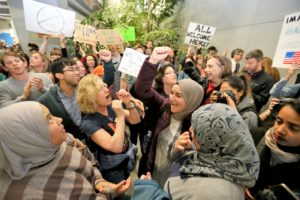
    Julia Shearson, executive director of the Cleveland chapter of the Council on American-Islamic Relations, will speak on what it's like to be a Muslim woman in America at a special dinner meeting of the Medina County Branch of the American Association of University Women on Sept. 28. She is shown here at the Women's March on Cleveland last January.
    Julia Shearson, executive director of the Cleveland chapter of the Council on American-Islamic Relations, will speak on what it’s like to be a Muslim woman in America at a special dinner meeting of the Medina County Branch of the American Association of University Women on Sept. 28. She is shown here at the Women’s March on Cleveland last January.(Thomas Ondrey/The Plain Dealer)

    MEDINA, Ohio – What is it like to be a Muslim woman in the United States?

    Julia Shearson, executive director of the Cleveland Chapter of the Council on American-Islamic Relations (CAIR), will share her perspective at a dinner and talk Sept. 28 at the A.I. Root Community Room, 623 Liberty St.

    Her talk is a program of the Medina County branch of the American Association of University Women.

    The evening will start with dinner at 6 p.m., followed by Shearson’s presentation at 7:15 p.m. Her talk is free and open to the public. The dinner, catered by Miss Molly’s Tea Room, is $19 per person.

    Shearson has headed the Cleveland chapter of CAIR, the largest Muslim civil rights advocacy organization in the United States, for 13 years.

    During that time, she has won awards and recognition for her work promoting diversity and mutual understanding.

    The AAUW works to advance equity for women and girls through advocacy, education, philanthropy and research.

    For reservations or more information about the program, call 330-725-4950 or email programs.reserve@zoominternet.net.